
Web Design Surrey That Brings More Enquiries
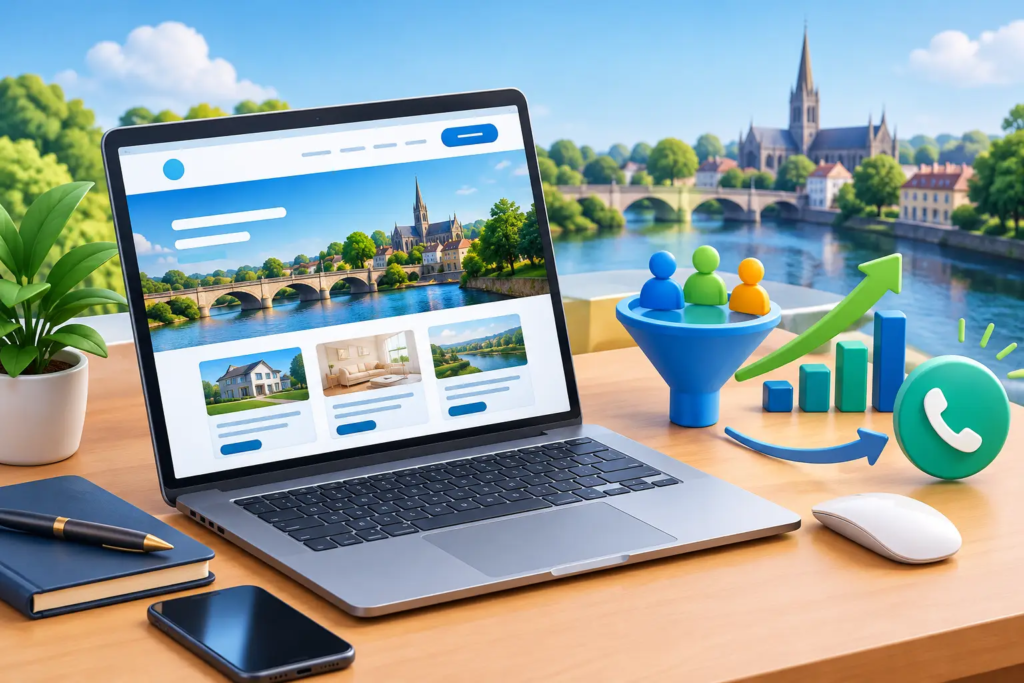
A potential customer has searched for a local contractor, compared a few options and landed on your website. In a matter of seconds, they decide whether your business feels credible enough to contact. That is why web design Surrey businesses can rely on is about far more than attractive pages. It needs to make your services clear, show why you are the right choice and give people a simple reason to get in touch.
For a Surrey service business, your website often does the work of a receptionist, sales brochure and first meeting all at once. If it looks dated, is difficult to use on a phone or leaves visitors unsure what you actually offer, good opportunities can disappear before your team ever has the chance to quote.
What Web Design Surrey Businesses Need to Deliver
A good business website should support a commercial purpose. For some companies, that means generating quote requests. For others, it may be booked consultations, phone calls, site visits or enquiries from a specific local area. The right design starts with that outcome, rather than selecting colours or page layouts in isolation.
This matters especially for trades, property care firms, security companies and professional services. Customers are usually not browsing for entertainment. They have a problem to solve, a deadline to meet or a supplier to assess. They want quick reassurance that you cover their area, understand the job and can be trusted to carry it out properly.
Your site should answer the practical questions early: what you do, who you help, where you work and how someone can contact you. A polished design helps, but clarity is what keeps people moving towards an enquiry.
Make the next step obvious
Every key page needs a clear next action. That might be asking for a quote, booking a call or phoning your office. If a visitor has to hunt for contact details, decipher vague wording or complete an unnecessarily long form, many will simply move on to the next supplier.
The best approach depends on the service. An emergency repair business may need a prominent click-to-call button. A building contractor dealing with larger projects may benefit from a short enquiry form that gathers useful project details. There is no single layout that works for every business, which is why the website should reflect how you actually sell and serve customers.
Design for Trust Before You Ask for the Lead
Local customers are careful about who they let into their home, appoint to work on a property or trust with an important service. Your website should reduce that uncertainty. Strong branding, real project photography, clear service descriptions and honest customer feedback all help a visitor feel more confident.
Consistency matters here. A professional logo and colour palette are not just decorative extras. When your website, vehicles, social media posts, quotations and email signatures look like they belong to the same business, your company feels more established and easier to remember.
Proof is equally valuable. Case studies, before-and-after images, relevant accreditations and reviews can all show the quality of your work. The aim is not to overload every page with badges and claims. It is to provide the right reassurance at the point a customer is deciding whether to contact you.
Use words your customers understand
Business owners can be so familiar with their trade that their website copy becomes too technical or too broad. Phrases such as “quality solutions” or “bespoke services” sound positive, but they do not tell a customer much. Specific language performs better: explain the work you carry out, the type of client you serve and the locations you cover.
For example, a property maintenance company should not make visitors guess whether it handles planned maintenance, emergency repairs, landlord work or commercial contracts. Clear pages for those services make the site easier for customers to use and give search engines a stronger understanding of what the business offers.
Mobile Experience Is Part of the Sales Process
Many local searches begin on a mobile phone, often when someone is away from a desk and ready to act. A website that looks fine on a large monitor but has tiny text, awkward menus or forms that are difficult to complete on a phone is likely to lose enquiries.
Responsive web design adjusts the layout for different screen sizes, but it should also consider how people behave on those devices. Phone numbers should be easy to tap. Important information should appear without excessive scrolling. Images need to look sharp without slowing the site down.
Speed is not a minor technical detail either. Slow pages frustrate visitors and can undermine confidence before they have read a word about your business. Large uncompressed images, unnecessary features and poorly managed website updates can all affect performance. Good design balances visual impact with a site that remains quick and dependable.
Build Local Visibility Into the Website
A new site cannot generate enquiries if the right people cannot find it. Search engine optimisation should therefore be considered during the web design process, not added as an afterthought months later.
This does not mean cramming locations into every sentence. It means building useful, well-organised pages around the services and areas that matter to your business. A Surrey company might serve Epsom, Leatherhead, Sutton, Kingston and surrounding locations, but each area page should offer genuine relevance rather than copied wording with a place name swapped out.
A sound website structure makes it easier for search engines to understand your core services. Clear page titles, logical headings, useful content and strong internal organisation all play a part. So do the details visitors may not immediately see, such as page speed, mobile usability and technically clean set-up.
For businesses that want faster visibility in competitive sectors, a website can also work alongside Google Ads. The advert brings the right prospect to the page, while the page does the harder job of earning their trust and prompting contact. Sending paid traffic to a generic homepage is often a waste of budget when a focused service page would give the visitor a clearer path.
A Website Is Not Finished on Launch Day
Launching a new website is a major step, but it should be the start of an ongoing process. Services change, new work is completed, customer questions emerge and local competitors adjust their marketing. A website that is reviewed and improved regularly has a better chance of continuing to produce results.
Analytics can show which pages attract visitors, where enquiries come from and where people leave the site. That information helps you make sensible improvements rather than relying on guesswork. Perhaps a popular service needs a stronger call to action, a form needs simplifying or a high-performing page deserves support from social content and paid advertising.
Reviews, social media, email marketing and search visibility are most effective when they reinforce the same message. A customer may first see a social post, check your Google reviews, visit the website and only then submit an enquiry. Treating each channel as a separate task can create an inconsistent experience. Treating them as connected parts of your online presence makes every activity work harder.
Choosing the Right Level of Support
Some businesses need a straightforward brochure website that presents their services professionally and makes contacting them easy. Others need a broader plan involving branding, regular content, local SEO, paid advertising and ongoing reporting. Neither approach is automatically better. It depends on your growth goals, competition and how much lead generation you need from digital channels.
The useful question is not simply, “How much does a website cost?” It is, “What should this website help the business achieve?” A lower-cost site that does not represent your work properly or generate relevant leads can become expensive through missed opportunities. Equally, there is little value in paying for features your customers will never use.
Working with one accountable local partner can make this easier to manage. At Web Social Surrey, website design can sit alongside the branding, visibility and ongoing marketing needed to keep a business moving forward, without requiring owners to coordinate several separate suppliers.
Your website should give customers confidence before they pick up the phone. Start with the questions they need answered, show the standard of your work and make the next step feel simple. That is how a website becomes a useful part of your day-to-day growth, rather than another item left on the to-do list.